


Table of Contents
What is SEO?
SEO (Search Engine Optimization) is the process of optimizing a website to improve its visibility in organic (non-paid) search engine results, such as on Google.
The main goal of SEO is to help search engines understand what your website is about and show it to the right users at the right time. SEO focuses on clarity, relevance, and usefulness, not shortcuts or tricks.
When a page is optimized properly, search engines can understand:
- What the page is about
- Who it is meant for
- What problem does it solve?
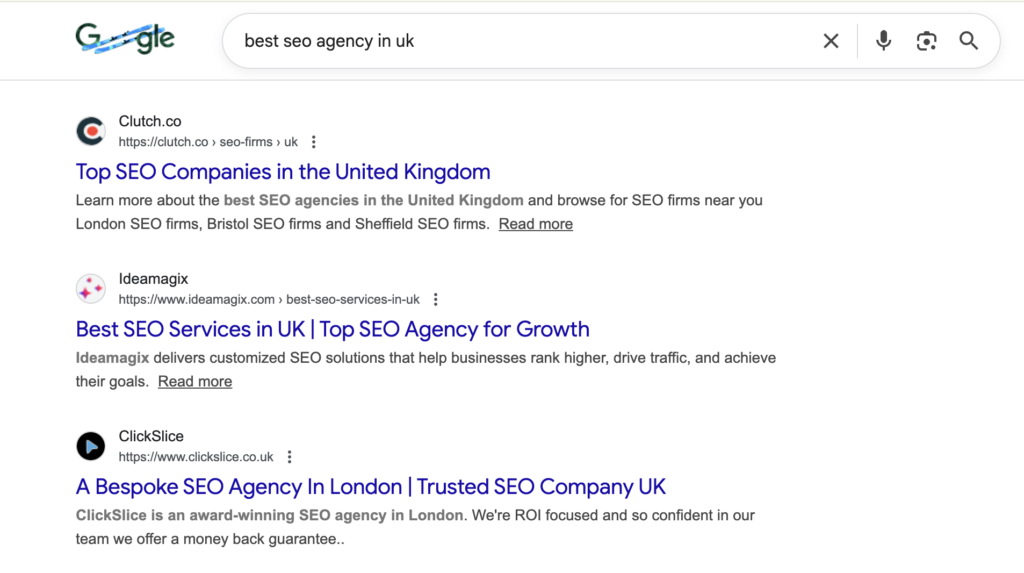
Now look at this search query: “best SEO agency in the UK.”
In the organic results, you see pages like:
- “Top SEO Companies in the United Kingdom”
- “Best SEO Services in the UK”
- “A Bespoke SEO Agency in London”
These pages appear because Google understands that:
- They are about SEO agencies.
- They are relevant to the UK.
- They help users who are trying to find and compare SEO agencies.
Google is not showing these pages randomly.
It reads the content on these websites, checks whether it clearly explains their SEO services, mentions the UK naturally, and helps users make a decision. Pages that do this well earn a place in the organic results.
That visibility is not paid for.
It is earned by clearly explaining what the business does, who it serves, and how it helps.
This is SEO in action, helping useful and relevant pages appear when someone searches, without running ads.
How Is SEO Different From PPC and SEM?
When people talk about SEO, PPC, and SEM, they often get mixed up. The difference becomes clear once you see how each one works on Google.
SEO is about earning visibility naturally. You improve your website and content, so Google shows it when someone searches for something relevant. It takes time, but once a page ranks, it can consistently drive traffic without paying for every visit.
PPC, on the other hand, is paid visibility. You run ads on Google and pay every time someone clicks them.
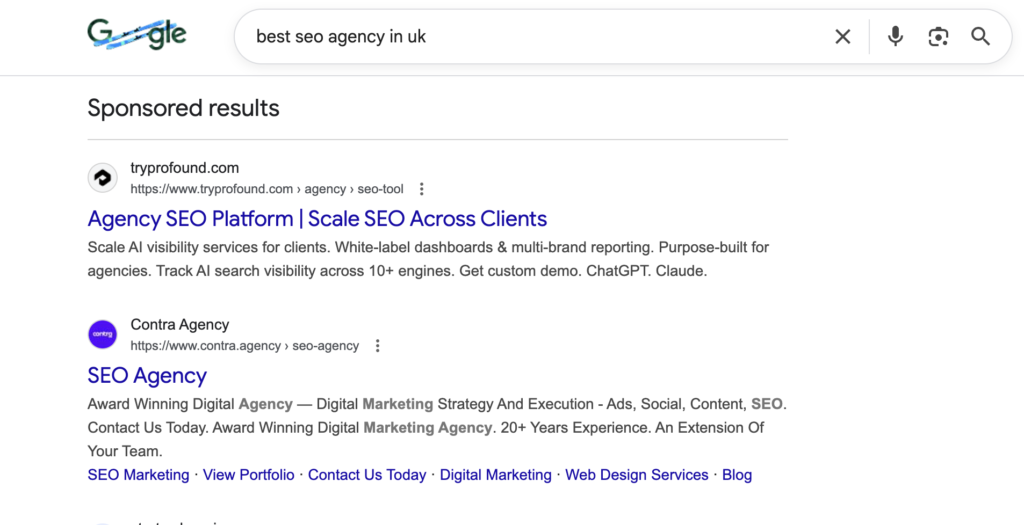
You can see this clearly in the search results. When someone searches for “best SEO agency in the UK,” the results marked as “Sponsored” appear at the top. These businesses are paying Google to show their websites there. The moment they stop running ads or their budget ends, those results disappear.
SEM is the bigger picture. It simply means using both SEO and PPC together as part of one search marketing strategy.
For example, a business might run Google ads to get instant visibility while also working on SEO so its website ranks organically over time. The ads bring quick traffic, and SEO builds long-term growth.
That combination of short-term results and long-term visibility is what SEM is all about.
Why SEO is Important?
SEO matters because it helps your website appear exactly when people are already looking for what you offer. Most online journeys begin with a search — people searching for answers, solutions, services, or products.
SEO connects you with these users without paying for every click, and that makes it one of the most cost-effective ways to attract relevant traffic.
According to research reported by Search Engine Land, organic search is responsible for about 53% of all website traffic, while paid search accounts for only around 15%.
This tells us something simple but powerful:
More than half of all traffic on the web comes from unpaid search results.
That’s why strong SEO matters.
How Does SEO Work?
SEO works by helping your website fit into the way search engines decide what to rank.
Search engines are constantly trying to show the most helpful results to users. When you optimize your content and website in a way that supports this goal, your chances of visibility improve.
But SEO is never fixed. Search engines keep their systems private and update them often, which means strategies that work today may change tomorrow. That’s why testing, learning, and adapting are a big part of SEO.
How Do Search Engines Work?
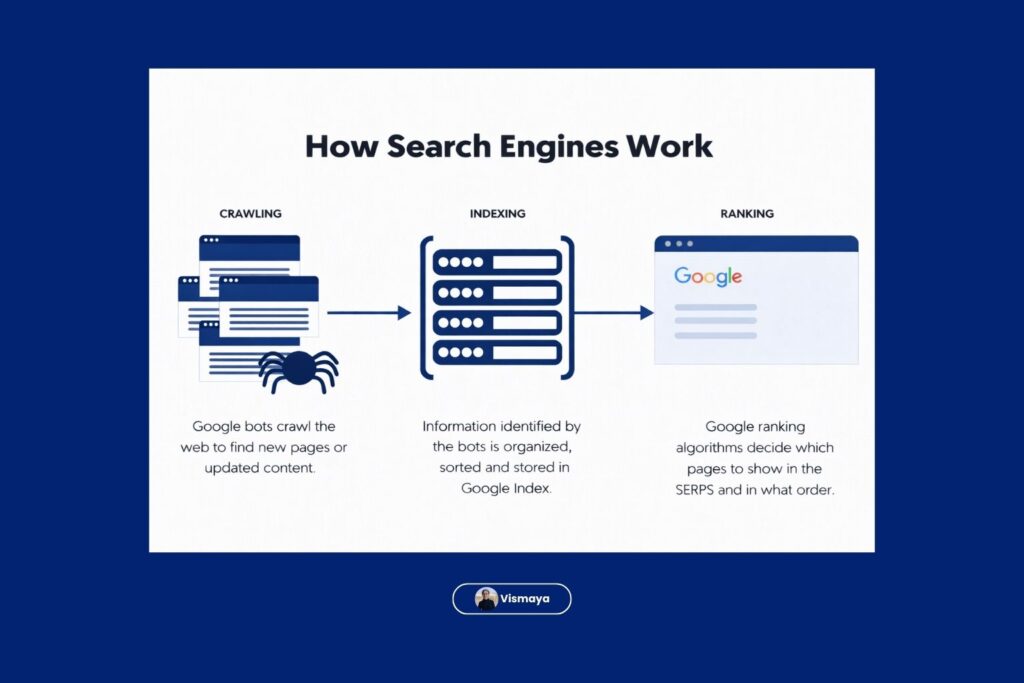
How Do Search Engines Work?
Search engines work in a few clear steps to find and show the best results to users. SEO works by supporting each of these steps.
Step 1: Crawling
First, search engines try to find pages on the Internet.
They use automated bots that move from one page to another through links and sitemaps. Whenever you publish a new page or update an existing one, these bots try to discover it.
If a page cannot be accessed or linked properly, search engines may not find it at all.
Step 2: Indexing
Once a page is found, search engines try to understand what it’s about.
They read the content, look at headings, images, links, and overall structure. Then they store this information in a large database called the index.
If a page is unclear or poorly structured, search engines may struggle to understand it correctly.
Step 3: Ranking
When someone searches for something, search engines decide which pages should appear first.
They compare all relevant pages in their index and rank them based on factors like relevance, usefulness, clarity, and trust.
Pages that closely match what the user is looking for appear higher in search results.
Let’s say you publish a blog titled “SEO Basics for Beginners.”
- Search engines first discover the page through links or a sitemap.
- They read the content and understand that it explains SEO for beginners.
- When someone searches for “what is SEO,” search engines compare your page with others and rank it if it provides clear and helpful information.
How to Measure SEO?
SEO is measurable. You don’t have to guess whether it’s working or not.
You measure SEO by tracking how people find your website, what they do after they arrive, and whether your visibility in search results is improving over time.
To do this, marketers use SEO tools like SEMrush, along with analytics platforms, to monitor performance and identify areas that need improvement.
Key SEO metrics to track
1. Organic traffic
This shows how many people visit your website through organic search results. If SEO is working, organic traffic should gradually increase.
2. Keyword rankings
This tells you where your pages appear on Google for specific search terms. Tracking rankings helps you understand which keywords are improving and which need more work.
3. Click-through rate (CTR)
CTR shows how often people click your website after seeing it in search results. A low CTR may mean your title or meta description needs improvement.
4. Engagement metrics
Metrics like bounce rate and time on page help you understand whether users find your content useful after clicking.
5. Conversions
Conversions track whether visitors take action, such as filling out a form, signing up for a newsletter, or making a purchase. This is where SEO connects to real business results.
How SEMrush helps
SEMrush helps measure SEO by showing:
- Keyword performance and movement
- Organic traffic trends
- Technical SEO issues
- Backlinks and competitor insights
By tracking these metrics regularly, you can understand what’s working, what isn’t, and what to improve next.
What Are the Pillars and Core Skills of SEO?
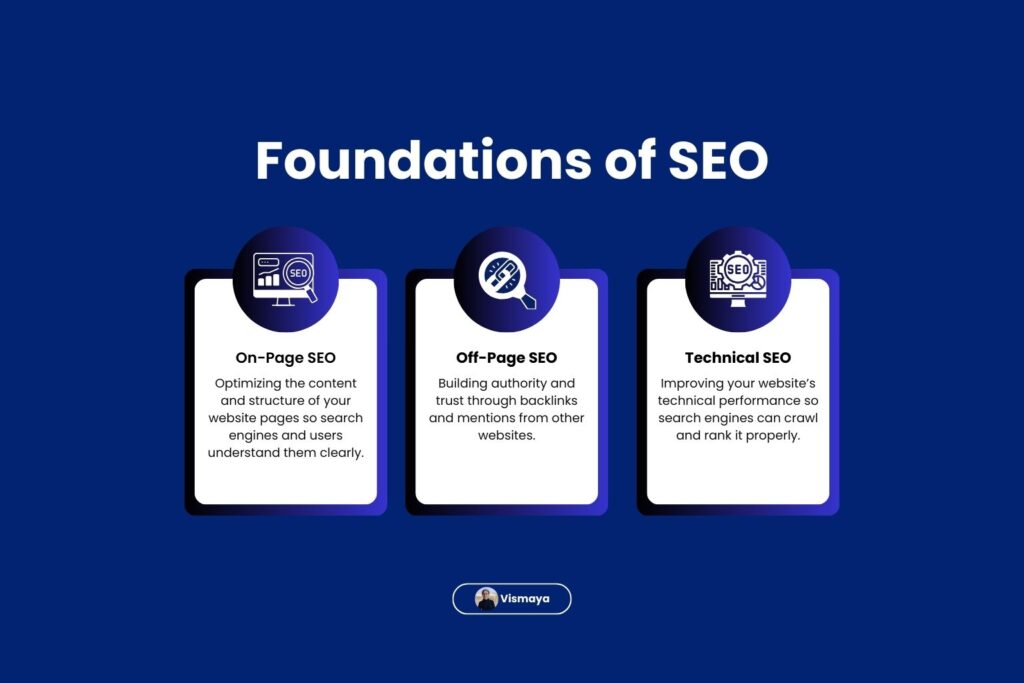
SEO is not a single task or trick. It works best when multiple areas come together and support each other.
At its core, SEO is built on three main pillars: On-Page SEO, Off-Page SEO, and Technical SEO. Each pillar focuses on a different part of how search engines understand, trust, and rank a website. Ignoring even one of them can limit your results.
When all three are done properly, SEO becomes much more effective and sustainable.
On-Page SEO
On-page SEO focuses on everything you control within your website pages. Its main goal is to help search engines clearly understand what each page is about and help users find what they are looking for easily.
This includes optimizing content, headings, titles, images, and internal links.
Best practices for On-Page SEO include:
- Writing clear, helpful content that matches search intent
- Using a proper heading structure (H1, H2, H3)
- Optimizing title tags and meta descriptions
- Adding internal links to related pages
- Using descriptive image alt text and clean URL structures
When on-page SEO is done well, both users and search engines can quickly understand the purpose of a page.
Off-Page SEO
Off-page SEO focuses on building trust and authority outside your website. Search engines use off-page signals to judge how reliable and credible a site is compared to others.
The most important off-page factor is backlinks from other websites to yours.
For Example:
If a well-known marketing blog links to your SEO guide, search engines see this as a signal that your content is valuable and trustworthy. Over time, multiple quality links like this can improve your website’s authority and rankings.
Off-page SEO is not about getting as many links as possible. It’s about earning links and mentions from relevant and trustworthy sources.
Technical SEO
Technical SEO focuses on how well your website functions behind the scenes. It ensures that search engines can crawl, index, and rank your site without issues.
Even the best content may struggle to rank if technical problems exist.
Best practices for Technical SEO include:
- Improving page speed
- Ensuring mobile-friendliness
- Fixing crawl and indexing issues
- Using secure HTTPS connections
- Maintaining a clean site structure
Technical SEO supports both on-page and off-page efforts by removing barriers that prevent search engines from accessing your content.
Together, these three pillars form the foundation of a strong SEO strategy. When they work in balance, SEO becomes clearer, more predictable, and more effective over time.
What Are the Different Types of SEO?
There are several specialized areas within SEO, and understanding the different types of SEO helps clarify how each one contributes to overall search performance. Depending on the type of website you have and how users interact with it, certain SEO approaches become more important than others.
If your site falls into one of these categories, applying focused SEO tactics can help you get better visibility and stronger results.
Image SEO
What it is:
Image SEO is the practice of optimizing images so search engines can understand them and show them in image search results.
Best practices:
- Use descriptive file names (e.g., seo-guide-infographic.png instead of IMG123.jpg)
- Add meaningful alt text that describes what the image shows
- Compress images so they load faster without losing quality
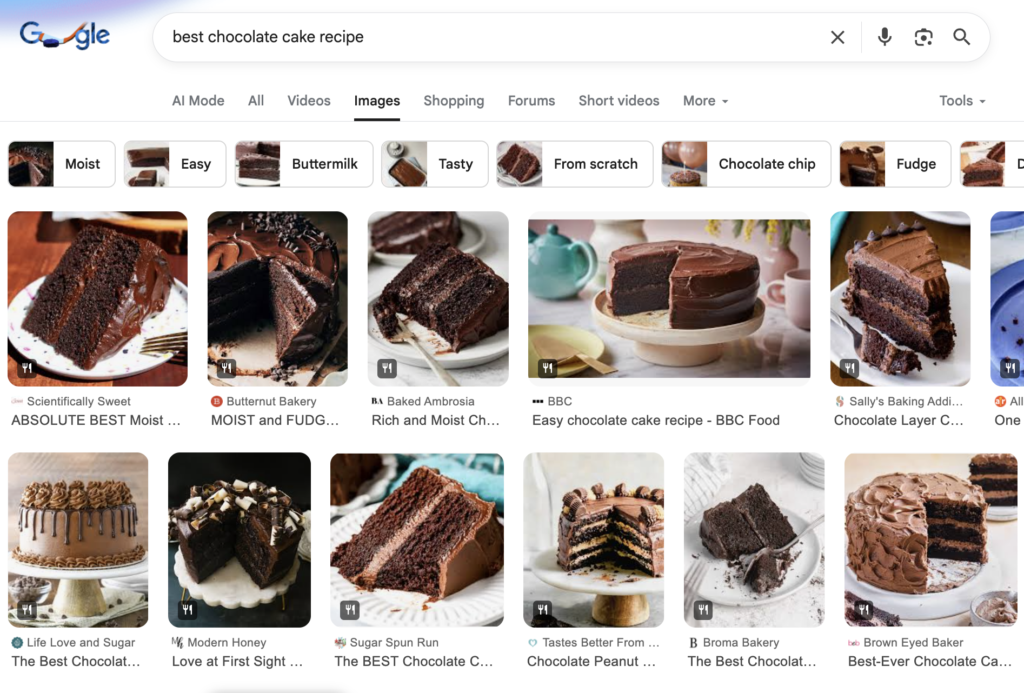
For Example, if you run a food blog and upload a photo of a chocolate cake, naming the file best-chocolate-cake.jpg with alt text like “best chocolate cake with frosting recipe” makes it easier for Google to show that image when someone searches for “best chocolate cake recipe.”
Video SEO
What it is:
Video SEO optimizes video content so it ranks better on search engines and platforms like YouTube.
Best practices:
- Clear, descriptive titles and descriptions
- Use timestamps and transcripts when possible
- Add relevant tags and categories
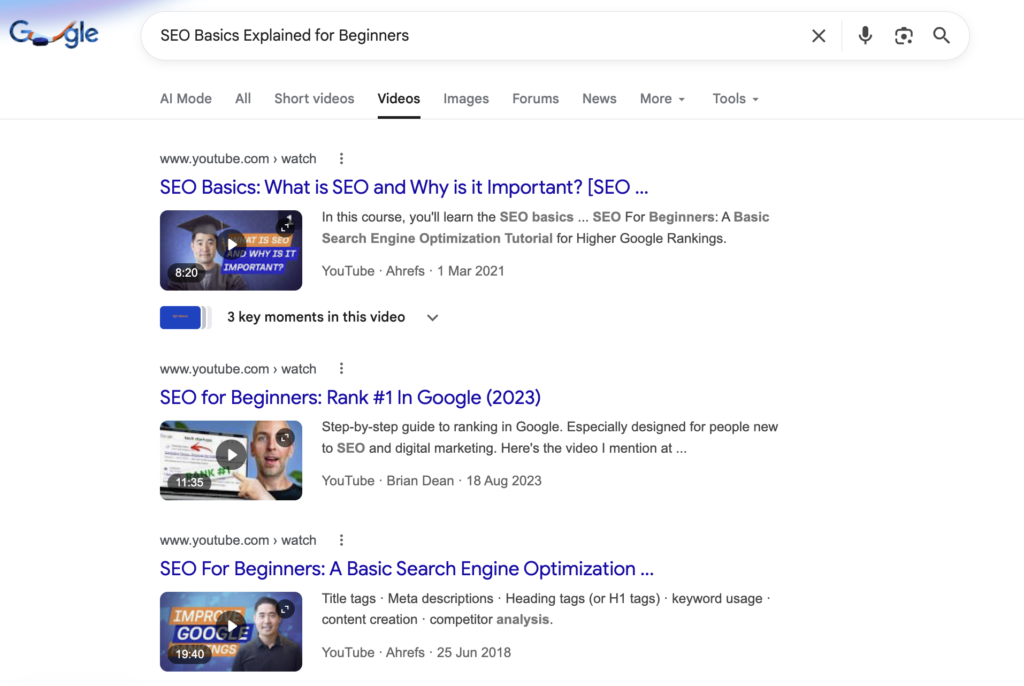
For Example, if you create a tutorial video titled “SEO Basics Explained for Beginners,” including a detailed description, clear chapters, and a transcript helps search engines understand your content and show it to people searching for “SEO tutorial for beginners.”
Local SEO
What it is:
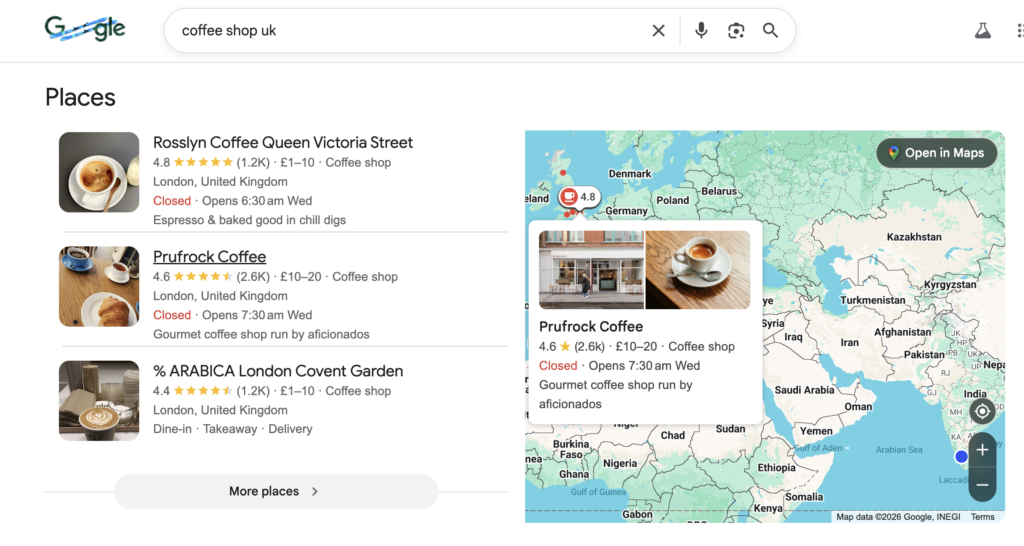
Local SEO helps businesses show up for location-based searches, especially on Google Maps and local search results.
Best practices:
- Optimize your Google Business Profile
- Collect and respond to reviews
- Keep your business name, address, and phone (NAP) consistent across listings
For example, if someone searches “best coffee shop near me,” local SEO will help Google show coffee shops near your location first. A properly optimized business profile with good reviews increases your chances of appearing in that list.
Mobile SEO
What it is:
Mobile SEO focuses on optimizing a website for mobile users, ensuring it performs well on phones and tablets.
Best practices:
- Use a responsive design that adjusts to any screen size
- Improve page speed for mobile
- Simplify navigation for touchscreens
For example, if a user searches “pizza delivery near me” on their phone, a fast, easy-to-use mobile site will rank better than a slow, desktop-only site because Google prioritizes mobile usability.
E-commerce SEO
What it is:
E-commerce SEO focuses on improving the visibility of product pages and online stores in search results.
Best practices:
- Write unique product titles and descriptions
- Use structured data (like product schema) to help search engines understand pricing, reviews, and availability
- Optimize category pages and internal linking
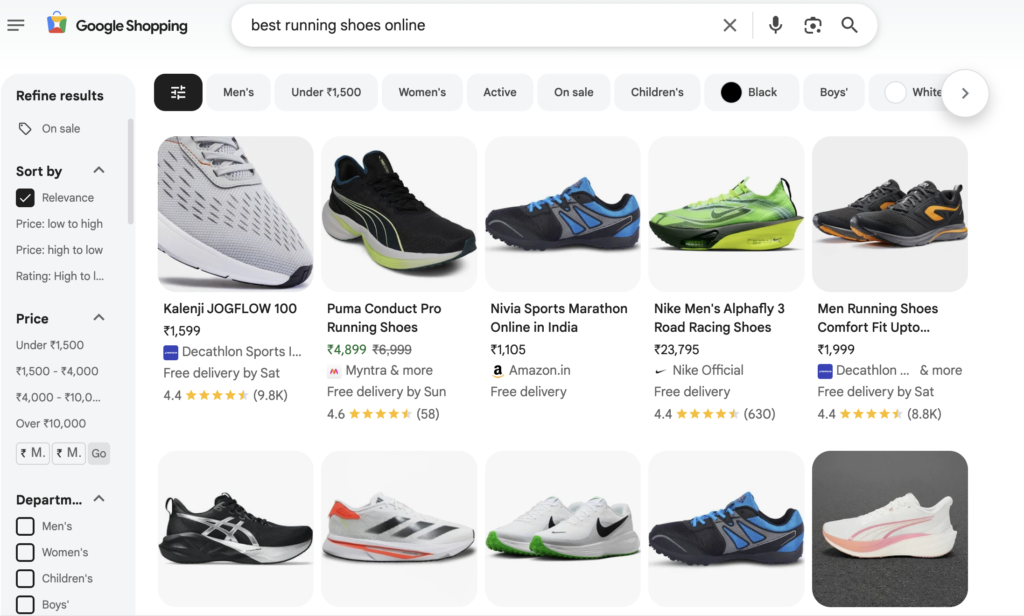
For Example, if you sell sneakers online, optimizing each product page with clear descriptions, sizes, and schema markup increases the chances of showing up when someone searches “best running shoes online.”
What Are the Key Elements of an SEO Campaign?
An SEO campaign is not a single task you do once and forget. It’s a structured process made up of multiple steps, each supporting the other.
The goal of an SEO campaign is simple:
Make your website easy to understand, easy to find, and trustworthy for both users and search engines.
Let’s break down the key elements one by one.
Technical Site Audit
A technical SEO audit looks at how well your website functions behind the scenes. It helps identify issues that may stop search engines from crawling, understanding, or ranking your site properly.
Here are the main areas it covers:
Crawlability
This checks whether search engines can access your pages. If important pages are blocked or hidden, they may never appear in search results.
Redirects
Redirects ensure users and search engines land on the correct pages. Too many or broken redirects can confuse search engines and hurt performance.
Duplicate content
Duplicate content happens when similar content exists on multiple URLs. This makes it hard for search engines to decide which page should rank.
Mobile responsiveness
This checks how well your website works on mobile devices. A site that is hard to use on mobile can lose rankings and users.
Site speed
Speed affects both rankings and user experience. Slow-loading pages often lead to higher bounce rates and lower visibility.
Keyword Research
Keyword research is about understanding what your audience is searching for and how they phrase their queries.
Instead of guessing topics, keyword research helps you create content based on real demand.
Best practices for keyword research include:
- Focusing on search intent, not just high search volume
- Using long-tail keywords that show clear intent
- Analyzing competitors to find keyword gaps
- Mapping one main keyword to one page
Good keyword research ensures you are creating content people actually want.
On-Page SEO & Content
On-page SEO focuses on optimizing individual pages so search engines and users understand them clearly.
Important on-page SEO elements include:
- Title tag: tells search engines what the page is about
- Meta description: encourages users to click
- Heading tags: structure content clearly
- Schema markup: helps search engines understand context
- Alt text: describes images for accessibility and SEO
- URL slug: keeps URLs clean and readable
Content quality also matters, which is where E-E-A-T comes in.
E-E-A-T stands for Experience, Expertise, Authoritativeness, and Trustworthiness. It helps search engines understand whether content is written by someone who knows the topic and can be trusted.
When creating content, focus on three things:
- Quality: genuinely helps the reader
- Intent: match what the user is looking for
- Freshness: keep content updated
Content that shows real experience and clear intent performs better over time.
Links and Brand Mentions
Links and brand mentions help search engines understand trust and authority.
A strong link-building strategy focuses on earning links naturally, not chasing random websites.
A great approach is creating genuinely useful content, such as guides, original insights, or data, and then promoting it through outreach, partnerships, or digital PR.
Quality links from relevant sites matter far more than a large number of low-quality links.
Local SEO
Local SEO helps businesses appear for location-based searches.
Example:
If someone searches for “SEO agency in UK,” Google looks for businesses that clearly mention their location, have optimized profiles, and show local trust signals.
Important local ranking factors include:
- Google Business Profile optimization
- Reviews and ratings
- Consistent business name, address, and phone number
- Local backlinks and citations
Strong local SEO helps nearby customers find and trust your business faster.
How Are AI and AI Overviews (AIOs) Changing SEO?
Search engines are changing fast. In the past, SEO was mainly about keywords, links, and technical setup. But now, artificial intelligence (AI) is becoming a central part of how search results are generated and how users interact with information.
One big shift is the rise of AI-generated overview summary answers right on the search results page. These can shrink the need to click through to a website, especially for simple questions. This change affects how we think about SEO success, click rates, and content strategy.
Let’s break down what this means in a way that’s easy to understand and backed by real trends.
How do AI Overviews affect click rate on Google?
AI overviews aim to give users quick answers directly on the results page. That’s great for users who want instant information, but it also changes how many people actually click through to websites.
Studies of early AI summary features show that for simple informational queries, click-through rates tend to drop because the answer is already presented by the AI. For example, if someone searches “What is SEO?” and Google shows a clear AI summary at the top, many users won’t scroll down or click any result.
However, for complex or long-form topics, users still click through to full articles because they want more depth than the overview provides.
This means:
- Users may not click for quick definitions
- Users will click when they need deeper value
- Top-ranking content still gets meaningful engagement
So while AI overviews are changing behavior, they don’t replace all website traffic, just some types of clicks.
How Google AI Affects Website Traffic
Google has started integrating more AI-based elements in search results, including answer boxes, summaries, and suggested insights.
Because of this:
- Basic informational queries show fewer clicks to websites
- Transactional and comparison queries still send clicks to sites
- Authority and trust signals (like expert content) become even more important
Real data shows that pages ranking with strong authority and original insights still attract clicks even with AI summaries present. Google doesn’t display AI results for every query; it shows them where it believes the user might be satisfied with a summary. For deeper or more nuanced searches, users still scroll and click.
In other words:
AI doesn’t kill clicks, it redistributes them.
Helpful, in-depth content still wins.
Are people using ChatGPT for Search over Google?
Yes, especially for learning, comparison, and exploration.
Many people now ask ChatGPT questions like:
- “How do I start SEO?”
- “What are the best tools for keyword research?”
- “Compare SEO vs PPC”
People like AI tools because they provide a conversational summary and step-by-step guidance.
However:
- Google still dominates local and transactional search
- Users still prefer Google for things like maps, nearby services, reviews, and products
- ChatGPT is used more for explanations, not direct action
So, AI assistants are complementing search rather than replacing it, at least for now.
How to rank in SearchGPT and AI-driven results
Ranking for AI systems like SearchGPT or AI overviews is not the same as traditional SEO, but it’s closely related.
Here’s what tends to help:
1. Clear, structured content
AI models like content with clean headings, direct answers, and strong logic.
2. Expertise and real insight
Generic content gets summarized, but is not always shown. Original data or expert explanation gets chosen more often.
3. Useful, direct answers
When a page answers a question directly and then expands into deeper detail, it helps both search engines and AI systems.
4. Topic authority
Pages that cover a topic comprehensively (not just superficially) are more likely to be used by AI overviews or similar features.
In simple terms:
Ranked content needs to be more useful, more structured, and more trustworthy than ever.
Conclusion
By now, you should have a clear understanding of how SEO works and why it matters. And if some parts still feel new or overwhelming, that’s completely normal.
SEO is something you learn over time. Come back to this guide whenever you need a refresher, whether it’s to revisit the basics, clarify a concept, or realign your approach. Bookmark it if it helps. Even experienced marketers go back to fundamentals more often than they admit.
FAQ
What is SEO optimization?
SEO optimization is the process of improving a website so it ranks better in organic search results and attracts relevant traffic.
Should you hire an SEO agency?
You should consider an SEO agency if you lack time or expertise. If you enjoy learning and testing, SEO can also be managed in-house.
Where can I learn more about SEO?
You can learn SEO by reading trusted blogs and applying what you learn on real websites. My blog covers SEO in a simple, practical way, while platforms like Semrush and Search Engine Land are great for in-depth guides, tools, and industry updates.
How long does it take for SEO to work?
SEO usually takes 3 to 6 months to show noticeable results, depending on competition and effort.
How do I rank faster on Google?
Focus on fixing what’s holding your site back. Improve content quality, update weak pages, and build a few strong, relevant links instead of publishing more low-value content.