


Table of Contents
It was a Tuesday morning when Sarah, a small business owner, finally launched her new website after months of hard work. The homepage looked gorgeous, the product pages were polished, and the blog was live. She refreshed Google all week, waiting to see her site appear for searches like ‘best handmade candles in Austin.‘ Nothing. Weeks passed in silence.
What Sarah didn’t know and what most website owners miss is that publishing a website is only the first step. The real work lies in on-page SEO: the process of optimizing each page so Google can understand it, trust it, and rank it in front of the right people.
If you’ve ever wondered what on-page SEO is, how it fits within the broader concept of SEO and its different types, and exactly how to do on-page SEO for your own website, this complete on-page guide has every answer you need with actionable on-page tips you can apply today.
What is On-Page SEO?
On-page SEO, sometimes called on-site SEO, is the practice of optimizing the content and HTML elements of individual web pages to improve their position in search engine results pages (SERPs).
Every decision you make on a specific page, from the words you choose to how you structure your headings, to the URL you assign, falls under the umbrella of on-page SEO. When implemented properly, it helps search engines clearly interpret your page and when it should appear for relevant searches.
Here are the core On-Page SEO best practices every website should follow:
- Write original, high-quality content that fully answers user intent.
- Place target keywords naturally in the title, headings, and body content.
- Create clear and attractive titles and meta descriptions that improve click-through rate.
- Use a logical heading structure (H1 → H2 → H3) to organize information
- Optimize images with descriptive alt text and compressed file sizes
- Build internal links between topically related pages on your site
- Create clean, keyword-rich URL slugs
- Ensure pages load fast and are fully mobile-friendly
| 💡 Think of on-page SEO as the language your website speaks to search engines. The clearer and more organized the language, the easier it is for Google to understand and reward your pages. |
Why is On Page SEO Matter?
Search engines can’t read your page like a person can. They crawl code and look for specific signals to understand what a page is about and decide whether it deserves to rank. On-page SEO is how you clearly and consistently provide those signals.
When you get it right, the effects compound. Well-structured, relevant pages rank higher. Higher rankings bring more organic traffic. More traffic means more people engaging with your content, which sends even stronger signals back to Google that your page is worth showing. Here’s what each element contributes:
- Your title tag tells Google the exact topic of the page.
- Your headings show the depth and organization of your content.
- Your keywords confirm topical relevance throughout the page.
- Your internal links connect related pages and distribute ranking authority across your site.
- Your page speed and mobile experience reduce bounce rate and show Google that users enjoy visiting your site.
Why on-page SEO is important comes down to this: it’s the bridge between the content you’ve worked hard to create and the audience that’s actively searching for it.ing for it.
On Page vs. Off Page SEO
On-page and off-page SEO are two sides of the same coin, but they work very differently, and understanding the distinction helps you prioritize your efforts.
On-page SEO is everything you do directly on your website content, keyword placement, HTML tags, internal links, images, and page performance. You control all of it.
Off-page SEO focuses on external signals like backlinks that influence your website’s credibility, generating brand mentions, and building social proof. You can influence it, but can’t fully control it.
| Feature | On-Page SEO (Internal) | Off-Page SEO (External) |
| Definition | Optimizing elements on your own website. | Actions taken outside your website to impact rankings. |
| Primary Goal | Improve relevance and user experience. | Build authority, trust, and reputation. |
| Control | Full control. | Limited control. |
| Core Elements | Keyword usage, title tags, content quality, H1-H6 tags, internal linking, URL structure. | Backlink profile, guest blogging, influencer outreach, social media signals, reviews. |
| Focus | Making site content better for users/search engines. | Backlink profile, guest blogging, influencer outreach, social media signals, and reviews. |
| Timing | Immediate or faster results. | Slower, long-term results (3-6 months). |
The simplest way to remember it:
- On-page SEO → tells Google what your page is about
- Off-page SEO → tells Google how much the rest of the web trusts your site.
- Both matter, but on page always comes first. A page with poor on-page optimization won’t rank well, no matter how many backlinks point to it.
How to Do On-Page SEO for Your Website?
On-page SEO is about improving the elements within your website to make your content clear, relevant, and user-friendly. When you understand how to do on-page SEO properly, you can optimize your content, keywords, and structure for better visibility. Let’s look at the key steps you can start applying today.
1. Focus on Original, Value-Driven Content
This one comes first because nothing else works without it. Google’s entire purpose is to surface the most helpful answer for any given search. If your page doesn’t genuinely serve the reader, no amount of optimization will compensate.
Before writing, spend time understanding what your audience actually wants to know, not just the surface-level topic, but the specific questions, concerns, and outcomes behind their search. Then write content that answers those questions more thoroughly, clearly, and honestly than anyone else.
A few things to keep in mind as you write:
- Align your content with search intent, whether users want to learn, compare options, or make a purchase.
- Cover the topic in depth since comprehensive content performs better than surface-level information.
- Include real examples, accurate data, and original insights to build trust and authority.
- Avoid duplicate or rewritten content and focus on adding unique value.
- Refresh your existing content often so it stays accurate and continues to perform well.
For research, Semrush is genuinely useful here not because it’s magic, but because it shows you what people are actually searching for, what questions they’re asking, and what angles your competitors are covering (or missing). The SEO Writing Assistant inside Semrush also lets you check keyword coverage as you write, which saves a lot of back-and-forth editing.
2. Use Keywords Naturally and Strategically
Once you know what you’re writing about, you need to use the right words in the right places. Search engines look for specific keyword signals to confirm what a page covers, but they’ve also gotten very good at detecting unnatural repetition. The goal is purposeful placement, not keyword stuffing.
For any given page, your focus keyword should appear in:
- Include your focus keyword in the H1, preferably near the beginning.
- Add it within the first 100 words to establish relevance early.
- Use it in at least one H2 or H3 subheading.
- Place it naturally throughout the content without overstuffing.
- Keep it in the URL slug, short and clean.
- Add it to the meta description for better visibility in search results.
- Add your keyword naturally to the alt text of at least one image.
Your secondary keywords should appear naturally in the body wherever they fit the context. Don’t force them. If a sentence sounds like it was written for a robot, rewrite it for a human.
For this Optimization, Surfer SEO is a tool worth knowing. It analyses the top-ranking pages for your keyword and shows you which terms appear, how often, and in what context. It’s less about following a formula and more about understanding what a thorough page on a given topic actually looks like.
3. Optimize Your Page Title for Rankings
Your title tag is the blue clickable headline people see in Google search results. It’s often the first and sometimes only thing a searcher reads before deciding whether to click. Getting it right matters both for rankings and for traffic.
A well-crafted title tag should:
- Place your focus keyword at the beginning or as early as possible.
- Write titles within the 50-60 character range so they don’t get cut off.
- Ensure your title clearly matches the page’s content.
- Add a compelling element like a number, benefit, or year to improve clicks.
- Make sure every page uses a different and specific title.
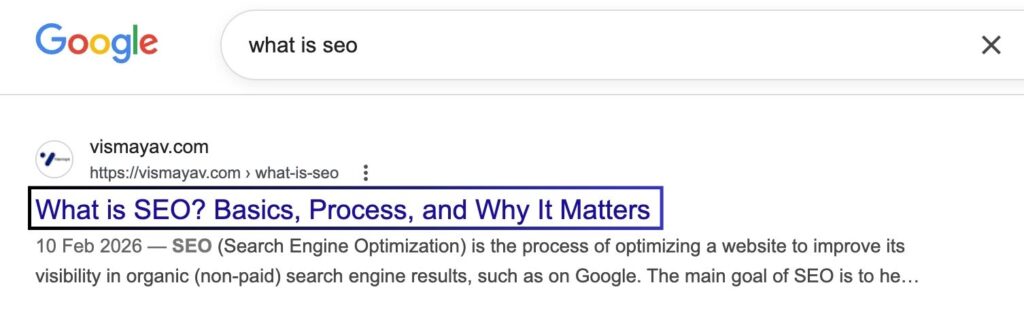
For optimizing your title tag, you can use Yoast SEO (for WordPress) and Mangools SERPSim, both of which let you preview how your title tag looks in an actual Google result before you publish. It’s a small habit that prevents a lot of truncated titles from going live unnoticed.
4. Write Meta Descriptions That Drive Clicks
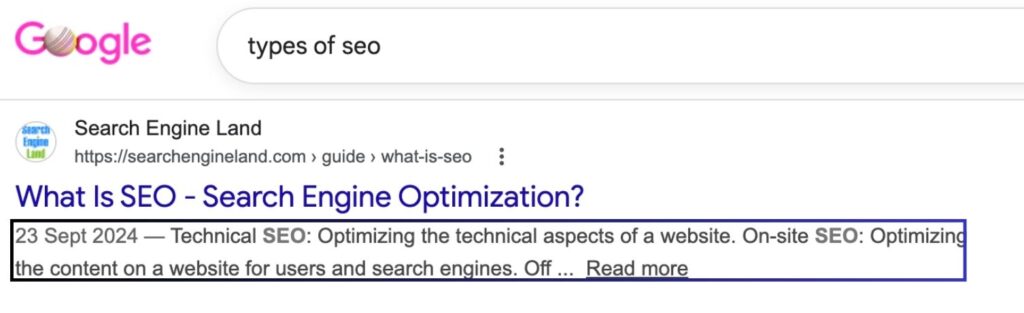
The meta description is the two-line snippet beneath your title in search results. Google doesn’t use it as a direct ranking factor, but it has a direct impact on how many people click through to your page, and a higher click-through rate does influence rankings indirectly.
Write a meta description that:
- Keep it between 150-160 characters, with a clear, honest summary.
- Include your focus keyword naturally to improve relevance.
- Write it in a human, conversational tone, not like a list of keywords.
- Add a subtle call to action that encourages clicks without sounding pushy.
- Make sure it is unique for every page to avoid duplication issues.
5. Use Headings to Improve Readability and SEO
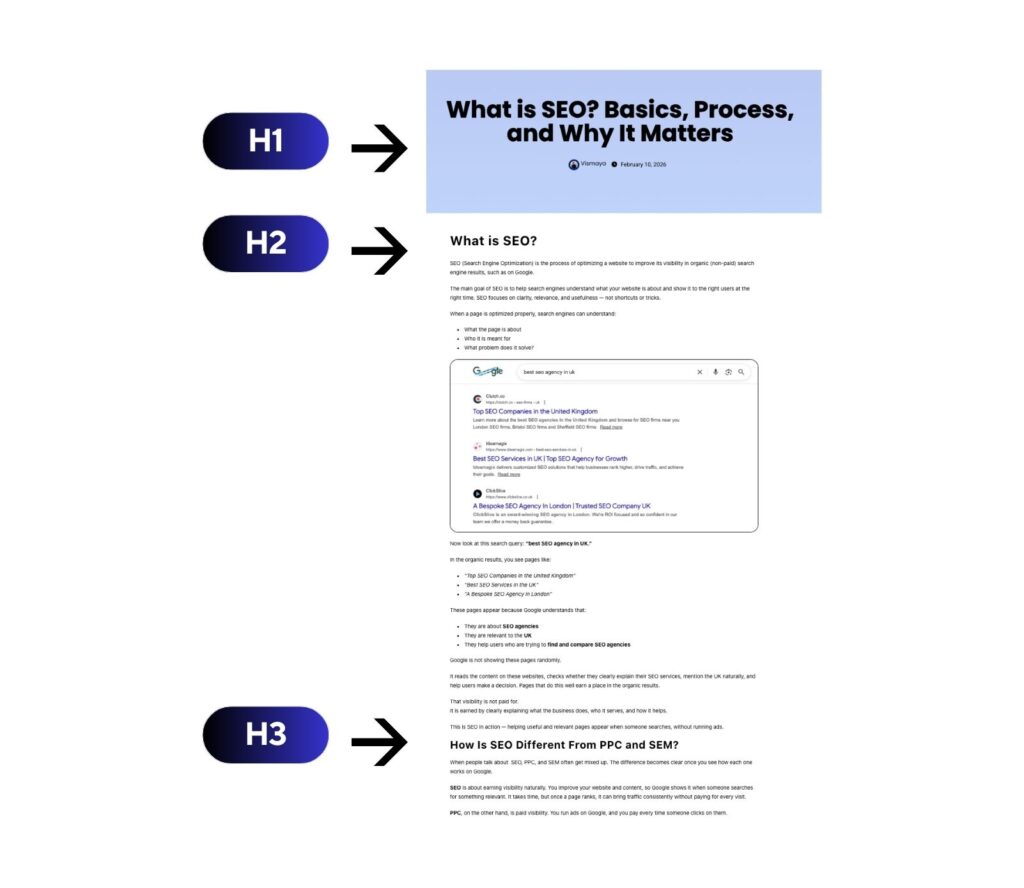
Headings do two important things: they help search engines map the structure and depth of your content, and they help readers quickly scan and navigate your page. Both matter for SEO. A page with no clear heading hierarchy is hard to crawl and even harder to read.
The basic rules:
- Use one H1 per page as the main title and include your focus keyword.
- Use H2 tags for major sections and naturally include secondary keywords.
- Use H3 tags for subtopics and long tail keyword variations.
- Follow a proper hierarchy and avoid skipping heading levels.
- Write clear, descriptive headings that match the content below.
- Use question-based headings where relevant to improve featured snippet chances.
Well-structured pages also tend to have lower bounce rates. When users land on your page and quickly find clear, well-organized content that matches what they were looking for, they’re more likely to stay, which signals value to search engines.
6. Create Clean, Keyword-Focused URLs
Your URL slug is the part of the web address after your domain name. It’s a small on-page signal, but it adds up — and a messy URL is a missed opportunity to reinforce what your page is about.
- Keep it short: Aim for 3–5 words maximum.
- Use your focus keyword: It should appear in the slug, not buried in parameters.
- Separate words with hyphens: Never use underscores or spaces
- Remove stop words: Drop filler words like ‘ a ‘, ‘the’, ‘how’, ‘is’, unless they’re part of the keyword.
- Never change a live URL casually: If you must update it, always set up a 301 redirect from the old URL to the new one.
| Poor URL: yoursite.com/p=9823?cat=seo&id=14 Optimized URL: https://vismayav.com/what-is-seo/ The second URL tells the reader, and Google exactly what they’re about to find. |
7. Strengthen Your Site With Internal Linking
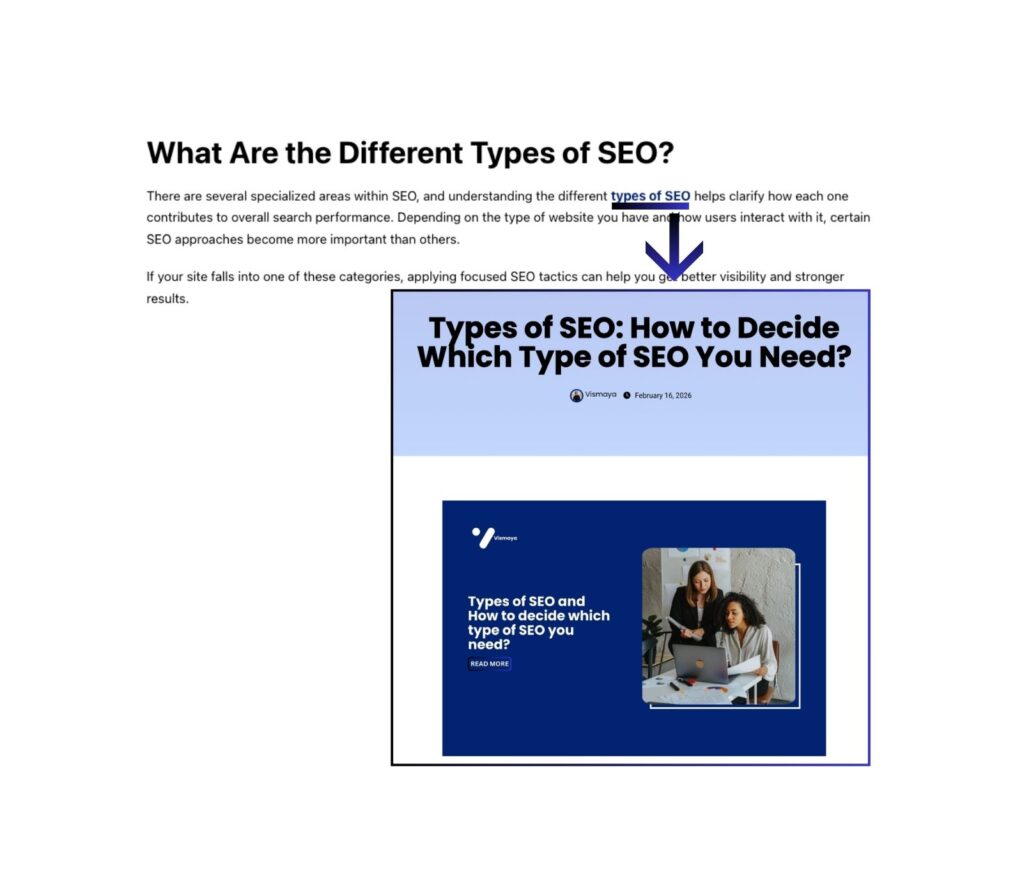
Internal linking is one of the most consistently underused on-page SEO tactics. Every time you link from one page on your site to another, you’re doing two things: helping Google discover and understand more of your content, and passing along some of the ranking authority from stronger pages to newer or weaker ones.
When adding internal links, keep these principles in mind:
- Link to pages that closely relate to the topic of your current content.
- Use descriptive anchor text; the clickable words should tell both the reader and Google what the linked page is about
- Do not rely on basic anchor text like “click here”; instead, make it meaningful and relevant.
- Your most important pages (core services, pillar guides) should receive the most internal links from across your site.
- Don’t overdo it. A few well-placed internal links per page are more effective than scattering them everywhere.
8. Strengthen Trust With Relevant External Links
Linking out to credible external sources makes your content more trustworthy for readers and for search engines. It shows that your writing is grounded in real, verifiable information rather than pulled from thin air.
The key is using external links purposefully:
- Link to credible and authoritative sources like official sites, research, or trusted publications.
- Add external links only when they provide real value to the reader.
- Set links to open in a new tab to keep users on your page.
- Avoid linking to direct competitors unless it genuinely adds context.
- Regularly check and fix broken external links to maintain quality.
9. Improve Image SEO With Proper Alt Text
Images make content easier to understand and more enjoyable to read. But from an SEO standpoint, every image on your page is also an opportunity, specifically through alt text.
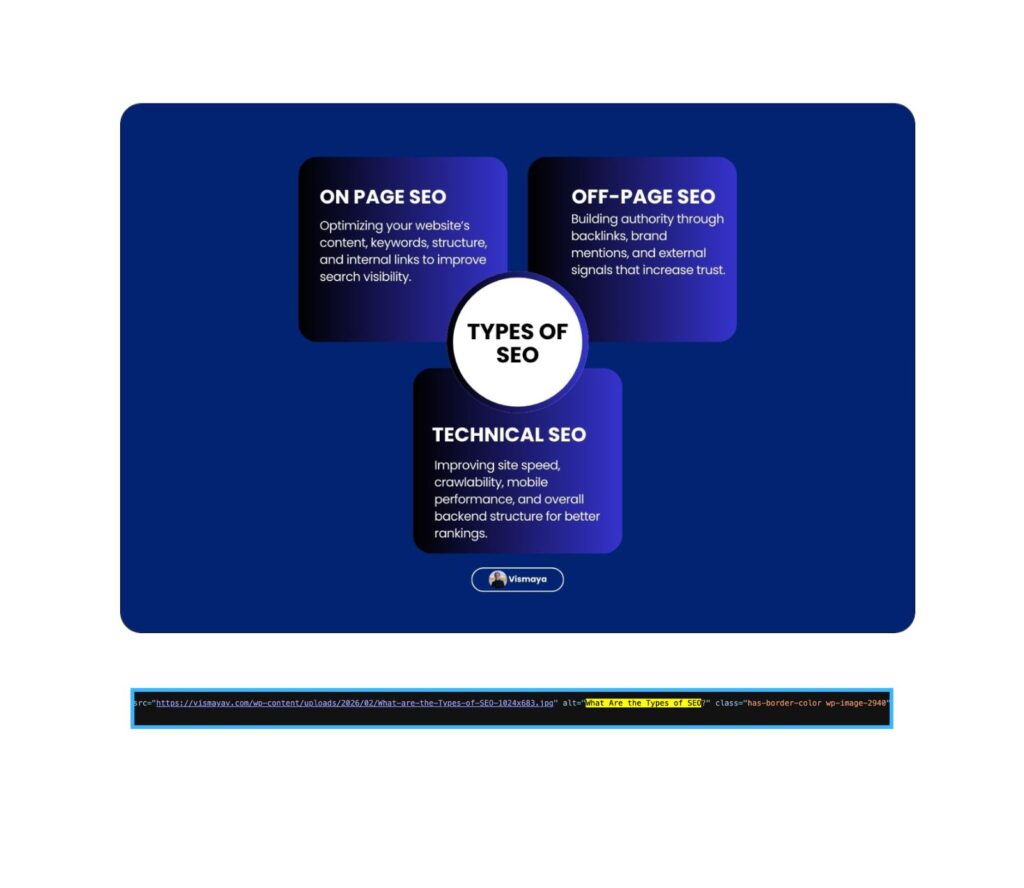
Alt text provides a short explanation of what an image represents, embedded in the HTML. It was originally created to make images accessible to screen readers and is used to describe images to visually impaired users. But it also tells search engines what an image depicts, making it eligible to appear in Google Image Search and reinforcing the page’s topical relevance.
Here’s how to get image optimization right:
- Write descriptive alt text: Describe what’s actually in the image, and include your keyword where it fits naturally, don’t just stuff the keyword in
- Name your files descriptively: on-page-seo-checklist.webp tells Google something; IMG_4821.jpg tells it nothing
- Compress before uploading: Large image files can significantly slow page load time.
- Use WebP format: It delivers better quality at smaller file sizes than JPEG or PNG.
- Add a caption when helpful: Captions are among the most-read text on any page; use them where they add context.
Important On-Page SEO Strategies
These three strategies go beyond the fundamentals. They’re what separate pages that rank from pages that dominate — and they’re becoming more important as search continues to evolve.
Optimize Page Speed
Page speed is a confirmed Google ranking factor, and it’s the one most likely to be hurting you right now without you realising it. A slow page frustrates users, increases bounce rate, and actively signals to Google that visiting your site is a poor experience.
Common reasons pages load slowly, and what to do about them:
- Uncompressed images: compress every image before uploading using tools like TinyPNG or ShortPixel
- Render-blocking JavaScript: defer or async-load scripts that don’t need to fire immediately
- No browser caching: set cache headers so returning visitors load your pages faster
- Slow server response: a low-quality hosting plan is often the silent culprit
- No CDN in place: a Content Delivery Network serves your pages from servers closer to the user
Google’s free PageSpeed Insights gives you a score out of 100 for both mobile and desktop, along with a prioritised list of exactly what to fix. Run it on your top pages and work through the recommendations from highest to lowest impact. Aim for a score above 90 on both devices.
LLM-Focused Optimization (GEO)
AI-powered search is no longer coming; it’s here. Google’s AI Overviews, ChatGPT, Perplexity, and other large language models (LLMs) interfaces are now primary research destinations for millions of people. A new discipline called Generative Engine Optimization (GEO) is emerging alongside traditional on-page SEO, and the good news is that the best practices overlap significantly.
LLMs generate answers by synthesizing the clearest, most credible, and best-structured sources they’ve been trained on. To give your content the best chance of being referenced:
- Write in plain, direct language; ambiguity gets filtered out quickly.
- Use question-and-answer formats that mirror how people phrase their queries.
- Define important terms clearly within the content itself.
- Build E-E-A-T signals: Experience, Expertise, Authoritativeness, and Trustworthiness.
- Include author information, publication dates, and citations to primary sources.
- Structure content with short paragraphs, clear headings, and logical flow
- Add schema markup to your website; It adds structured context to your content, improving how it appears in search results.
| 🤖 The qualities that make content great for LLMs clarity, depth, accuracy, honest attribution are the same qualities that make great content for human readers. You’re not optimizing for two different audiences. You’re just raising the bar across the board. |
Add Schema Markup
Schema markup is structured data added to your page’s HTML that helps search engines understand your content more richly. When implemented correctly, it unlocks what Google calls ‘rich results’ enhanced listings that include star ratings, FAQ dropdowns, product prices, event details, and more. These visually richer listings consistently earn higher click-through rates than standard text results.
The four most valuable schema types to know:
- Article schema: Used for blog posts and editorial content. Tells Google the content type, author, and publish date. Improves eligibility for Top Stories and author panels.
- Local Business schema: Essential if you have a physical location. Provides Google with your address, phone number, hours, and business category, directly boosting local and Maps visibility.
- Review schema: Enables star ratings to appear in your search listing. Even a small visual like stars dramatically increases click-through rates on product and service pages.
- Product schema: Ideal for e-commerce. Shows real-time price, stock status, and ratings inside search results, turning a plain listing into something that looks like a shopping ad.
You can validate your schema using Google’s free Rich Results Test. Run it before and after implementation to confirm everything is working as expected.
Ready to Optimize Your Website?
On-page SEO isn’t about doing everything perfectly. It’s about paying attention to the details most people ignore.
The pages that rank are usually not the ones trying to game the system, but the ones that genuinely help, are structured well, and feel easy to read.
Start small. Fix one page. Improve one section. Make one piece of content better than it was yesterday. That’s how real growth happens.
And over time, you’ll start noticing something interesting: your pages don’t just look better, they perform better.
Because good on-page SEO is not just a skill.
It’s a way of thinking.
And once you start seeing it that way, you approach every page differently.